The Growing Importance of Aquaculture
Are you ready to learn how Aquaculture may heal the environment? Aquaculture, the practice of cultivating aquatic species, now stands at the forefront of a burgeoning global discussion. As we navigate the complexities of climate change and environmental degradation, the spotlight on this age-old practice grows ever brighter.
States like Maine are developing aquaculture programs to combat traditional problems like overfishing. In addition, changes to the U.S.’s $102 billion seafood market may help the industry clean up some of its most glaring issues, such as dealing with climate change and pollution.
The Current State of Global Fisheries
A Look at Overfishing: The Threat to Marine Life
Overfishing, an unsustainable exploitation of our oceans, poses a dire threat to marine life. The remorseless extraction of seafood to satiate global demand has led to the dramatic depletion of many fish species, nudging them perilously close to extinction. This precarious situation disrupts the natural balance of marine ecosystems and threatens the livelihoods of communities reliant on fishing.
Overfishing has severely affected many fish species worldwide. Here are recent and most notable cases:

- Atlantic Cod: Historically, Atlantic Cod has been a staple for many coastal communities across the North Atlantic. However, intensive fishing, particularly in the latter half of the 20th century, caused a significant decline in their numbers.
- Bluefin Tuna: Known for its speed and strength, it is a highly sought-after fish, especially in Japan for sushi and sashimi. Overfishing has led to a critical decrease in their population.
- Orange Roughy: These deep-sea fish can live up to 150 years but grow and reproduce slowly. That causes them to be particularly vulnerable to overfishing. They’ve been suffering from overfishing since the late 1970s.
- Beluga Sturgeon: Found primarily in the Caspian and Black Seas, seafood lovers prize Beluga Sturgeons for their roe (eggs), which, after processing, becomes caviar. Overfishing, pollution, and habitat loss have led to a significant decline in their population.
- Sharks: Various sharks also are in danger due to overfishing to acquire their fins, meat, and liver oil. Their slow growth and reproduction rates make a recovery from overfishing particularly difficult.
- Patagonian Toothfish (Chilean Seabass): This deep-sea fish found in the southern ocean waters is a popular menu item. Illegal, unregulated, and unreported fishing has led to a significant decline in their numbers.
- European Eel: Overfishing, habitat loss, pollution, and obstacles to migration have led to a decline in European Eel populations.
It’s crucial to note that the impact of overfishing isn’t limited to these species alone. Many other species worldwide are also affected, leading to a ripple effect that disturbs the balance of marine ecosystems.
Impact of Overfishing on the Ecosystem and Biodiversity
Overfishing does more than decimate fish populations; it upsets the intricate ecological balance, leading to a catastrophic domino effect. As species vanish, the predators and prey within the food web are thrown into disarray, culminating in biodiversity loss and the potential collapse of entire marine ecosystems.
Aquaculture: An Overview
Understanding the Basics of Aquaculture
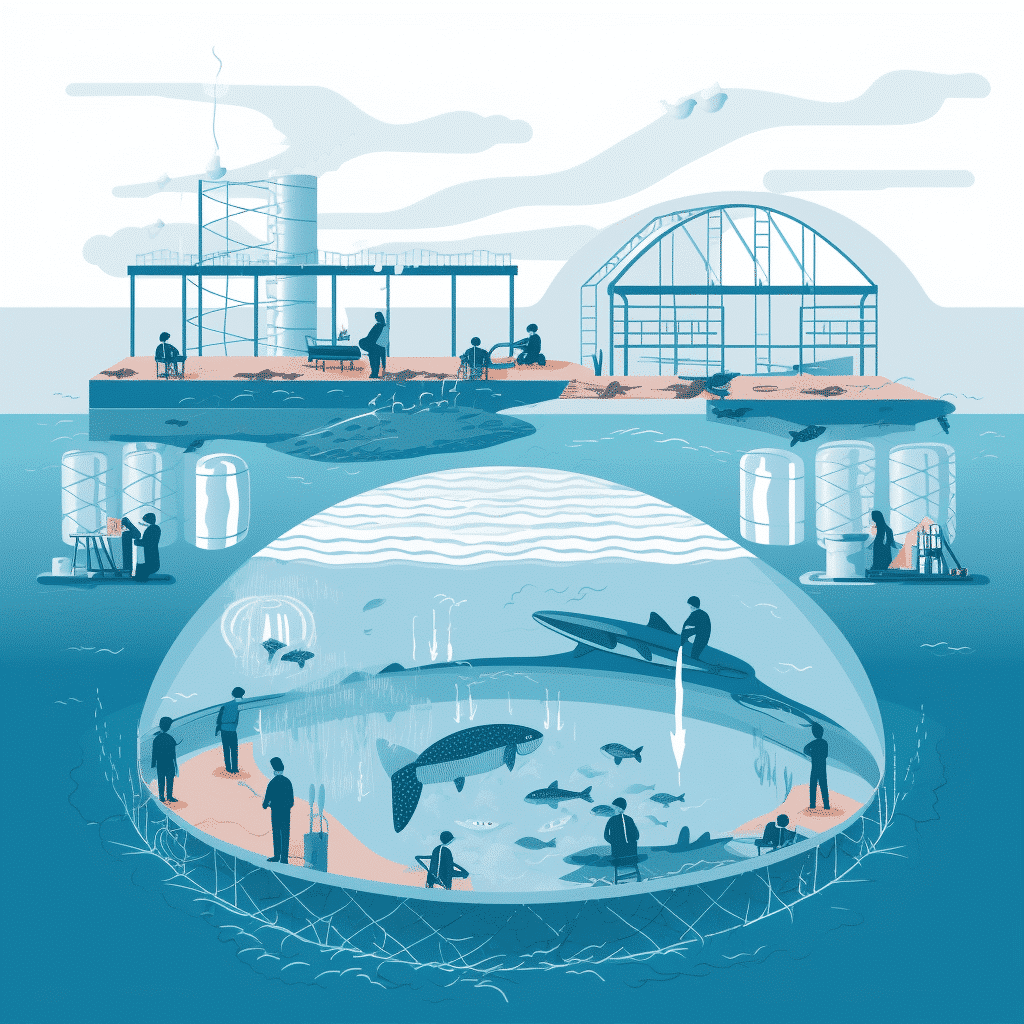
Aquaculture, colloquially known as fish farming, involves the breeding, rearing, and harvesting of plants and animals in all water environments. From mollusks and crustaceans to fish and aquatic plants, aquaculture is a broad church encompassing diverse species.
A Brief History of Aquaculture: From Ancient Times to Modern Practices
The genesis of aquaculture dates back to ancient civilizations, where fish-rearing techniques were an integral part of society. Aquaculture has a rich and varied history, from ancient Egypt’s fish ponds to early China’s carp farming. Today, with the advent of technology and scientific understanding, modern aquaculture practices aim to optimize yields while minimizing environmental impact.
Aquaculture Techniques and Their Environmental Impacts
The Principle Techniques in Aquaculture
Aquaculture methodologies are myriad and diverse, ranging from mariculture (marine aquaculture) to integrated multi-trophic aquaculture (IMTA), where people farm different species together for mutual benefit. The choice of technique is contingent on the species in question, environmental conditions, and desired yield.
Intensive and Extensive Aquaculture: Pros and Cons
Both intensive and extensive aquaculture have their merits and demerits. Intensive aquaculture, marked by high stocking densities and inputs, maximizes yield but may lead to environmental concerns like waste management. Conversely, extensive aquaculture, with lower stocking densities, has less environmental impact but produces lower results.
The Role of Recirculating Aquaculture Systems (RAS)
RAS, a high-tech solution, enables water recycling within the farming system. It promises a sustainable future for aquaculture by reducing water usage, allowing for precise control of farming conditions, and mitigating the risk of disease transmission.
Aquaculture as a Solution to Overfishing
How Aquaculture Can Sustain Seafood Demand
Aquaculture holds the key to meeting the world’s escalating seafood demand without plundering our oceans further. Growing aquatic species in a controlled environment can satisfy global consumption needs and allow wild fish stocks to recover.
Aquaculture vs. Wild-Catch: A Comparative Analysis
While wild-catch fishing has advantages, it is increasingly unsustainable due to overfishing. Aquaculture, however, can be a viable alternative, provided people practice it sustainably. In addition, it offers a controlled environment, predictable yields, and the potential to lower the pressure on wild fish populations.
The Environmental Benefits of Aquaculture
Promoting Biodiversity: Aquaculture’s Role in Species Preservation
Sustainable aquaculture techniques can play a significant role in promoting biodiversity. For example, reducing the pressure on wild fish populations allows endangered species the necessary respite to recover. Furthermore, certain aquaculture practices, like restorative aquaculture, can enhance biodiversity by creating habitats for various species.
Mitigating Climate Change: Aquaculture’s Carbon Footprint
Compared to terrestrial animal farming, aquaculture has a lower carbon footprint. Moreover, specific forms of aquaculture, like seaweed and bivalve farming, can even sequester carbon dioxide, mitigating climate change’s effects.
Aquaponics: The Intersection of Aquaculture and Hydroponics
Aquaponics, a system combining aquaculture with hydroponics, has demonstrated great promise. It creates a symbiotic environment where fish waste provides plant nutrients, purifies water, reduces environmental impact, and creates a circular economy.
Challenges in Aquaculture and Sustainable Solutions
Addressing Common Criticisms of Aquaculture
While aquaculture has its merits, it’s not without its detractors. Common criticisms include the potential for spreading disease, using fishmeal, and escaping farmed species. However, technological advances and better regulatory frameworks address these issues, steering aquaculture toward a more sustainable future.
Innovations in Aquaculture for Sustainable Practice
Innovations are shaping the future of aquaculture, from the use of alternative feeds to the development of offshore and multi-trophic systems. These advancements aim to increase efficiency, reduce environmental impact, and ensure the ethical treatment of farmed species.
Policies and Regulations: Ensuring Responsible Aquaculture
Regulatory oversight is crucial to ensure aquaculture practices are sustainable and environmentally friendly. Policies should be developed from the ground up to promote best practices, ensure the welfare of farmed species, and safeguard against potential environmental impact.
Future of Aquaculture: A Glimpse into a Sustainable Seafood Industry
Emerging Trends and Technologies in Aquaculture
Technology is revolutionizing aquaculture, from AI and IoT in monitoring and control to genetics in breeding programs. These trends make aquaculture more efficient, sustainable, and adaptable to changing environmental conditions.
How Aquaculture Can Shape the Future of Food Security
Aquaculture has the potential to contribute to global food security substantially. Moreover, with the world population set to reach 9.7 billion by 2050, sustainable aquaculture could provide a crucial source of high-quality protein.
The Potential of Aquaculture in Healing the Environment
The Power of Informed Consumer Choices: Supporting Sustainable Aquaculture
Consumers wield enormous power in driving the move toward sustainable aquaculture. By purchasing responsibly farmed seafood, they can incentivize sustainable practices and contribute to the healing of our environment. Aquaculture may heal the environment in new ways!
Final Thoughts: The Ocean’s Future is Aquaculture’s Future
Aquaculture, if managed responsibly, has the potential to heal our oceans, preserve biodiversity, and ensure food security for future generations. While the road ahead is fraught with challenges, the collective efforts of scientists, policymakers, and consumers can steer aquaculture toward a sustainable and prosperous future.
We’re keeping our eyes on Aquaculture and how it may help. Stop by for more updates!
Updated 06/04/2024